Polytetrafluoroethylene (PTFE), commonly known by the brand name Teflon™, is one of the most widely used engineering materials in the world. Renowned for its exceptional chemical resistance, low friction properties, and ability to withstand extreme temperatures, PTFE is used extensively across industries such as chemical processing, pharmaceuticals, food manufacturing, water treatment, and power generation.
However, when it comes to industrial sealing applications, not all PTFE materials are created equal.
Expanded PTFE (ePTFE) is a specially engineered form of PTFE that offers significantly improved sealing performance while retaining the chemical resistance and purity that make PTFE such a valuable engineering material. As industries increasingly seek reliable, long-lasting sealing solutions, expanded PTFE has become a preferred choice for critical applications.
What Is Conventional PTFE?
Conventional PTFE is manufactured through molding and sintering processes that produce a dense and relatively rigid material. It offers several well-known advantages, including:
- Excellent resistance to most chemicals
- High temperature resistance
- Low coefficient of friction
- Non-toxic and non-contaminating properties
- Long service life in harsh environments
These characteristics make conventional PTFE suitable for a variety of industrial applications such as valve components, pump parts, linings, sheets, rods, and standard gasket materials.
While conventional PTFE performs exceptionally well in many applications, its dense structure can sometimes limit its sealing effectiveness, particularly when flange surfaces are uneven or operating conditions are demanding.
What Is Expanded PTFE?
Expanded PTFE, commonly referred to as ePTFE, is produced by stretching pure PTFE under carefully controlled conditions. This process transforms the material’s dense structure into a unique network of interconnected fibers, creating a highly flexible and compressible material.
The result is a gasket material that combines the chemical inertness of PTFE with enhanced conformability and sealing performance.
Unlike conventional PTFE, expanded PTFE can adapt more effectively to flange irregularities, surface imperfections, and varying operating conditions, helping create a more reliable and long-lasting seal.
The Science Behind Expanded PTFE
One of the key advancements in modern expanded PTFE technology is the development of multi-directional fibrillated structures. Rather than relying on a simple stretched configuration, advanced expanded PTFE materials are engineered to provide uniform strength in multiple directions. This improves the material’s mechanical stability and enables it to maintain sealing stress over extended periods.
The benefits include:
- Improved dimensional stability
- Enhanced resistance to creep and cold flow
- Better recovery after compression
- Excellent load retention
- Reduced risk of leakage
These properties are particularly valuable in industrial environments where equipment downtime, product loss, and maintenance costs can have a significant operational impact.
Expanded PTFE vs Conventional PTFE
|
Property |
Conventional PTFE |
Expanded PTFE |
|---|---|---|
|
Structure |
Dense and rigid |
Expanded fibrous structure |
|
Flexibility |
Limited |
Highly flexible |
|
Compressibility |
Low |
High |
|
Conformability |
Moderate |
Excellent |
|
Sealing Performance |
Good |
Superior |
|
Adaptability to Uneven Surfaces |
Limited |
Excellent |
|
Resistance to Creep |
Moderate |
Improved |
|
Chemical Resistance |
Excellent |
Excellent |
Why Industries Are Choosing Expanded PTFE
- Superior Sealing Performance
The primary reason industries switch to expanded PTFE is its sealing reliability.
Sine the material is highly compressible and conformable, it fills minor imperfections in flange surfaces that may otherwise become leak paths. This helps create a tighter, more dependable seal even in challenging applications.
- Reduced Leakage and Maintenance Costs
Leakage is often viewed as a maintenance issue, but it can also result in:
- Product loss
- Unplanned downtime
- Increased labour costs
- Safety risks
- Environmental compliance concerns
By improving sealing reliability, expanded PTFE helps reduce these hidden costs and contributes to more efficient plant operations.
- Exceptional Chemical Resistance
Like conventional PTFE, expanded PTFE is resistant to a vast range of aggressive chemicals.
This makes it particularly suitable for applications involving:
- Acids
- Alkalis
- Solvents
- Corrosive process fluids
As a result, expanded PTFE is widely used throughout the chemical and process industries where material compatibility is critical.
- Suitable for High-Purity Applications
Because expanded PTFE is manufactured from pure PTFE without fillers or pigments, it is often selected for applications where product purity is essential.
Industries that benefit from this include:
- Pharmaceuticals
- Food and beverage processing
- Biotechnology
- Specialty chemicals
- Easy Installation
The flexibility of expanded PTFE allows it to conform easily during installation. This reduces the likelihood of installation-related sealing problems and makes it suitable for a wide variety of flange configurations.
- Ideal for Challenging Flange Conditions
Many industrial systems operate with flange surfaces that are less than perfect.
Factors such as corrosion, wear, manufacturing tolerances, or glass-lined equipment can create surface irregularities that are difficult for rigid gasket materials to seal effectively.
Expanded PTFE’s ability to adapt to these imperfections makes it particularly suitable for:
- Glass-lined reactors
- Fragile flanges
- Corroded flange faces
- Large-diameter flanges
- Low bolt-load applications
- Wide Operating Range
One of the major advantages of expanded PTFE is its versatility.
Modern expanded PTFE gasket materials can typically operate across a temperature range of approximately -200°C to +260°C while maintaining excellent chemical resistance and sealing performance.
They are also suitable for applications ranging from vacuum service to demanding process conditions, making them an attractive option for standardizing gasket inventory across multiple plant services.
Typical Applications of Expanded PTFE
Expanded PTFE gaskets are commonly used in:
- Chemical processing plants
- Pharmaceutical manufacturing facilities
- Glass-lined equipment
- Food and beverage processing
- Water treatment plants
- Pulp and paper industries
- Power generation facilities
- High-purity process systems
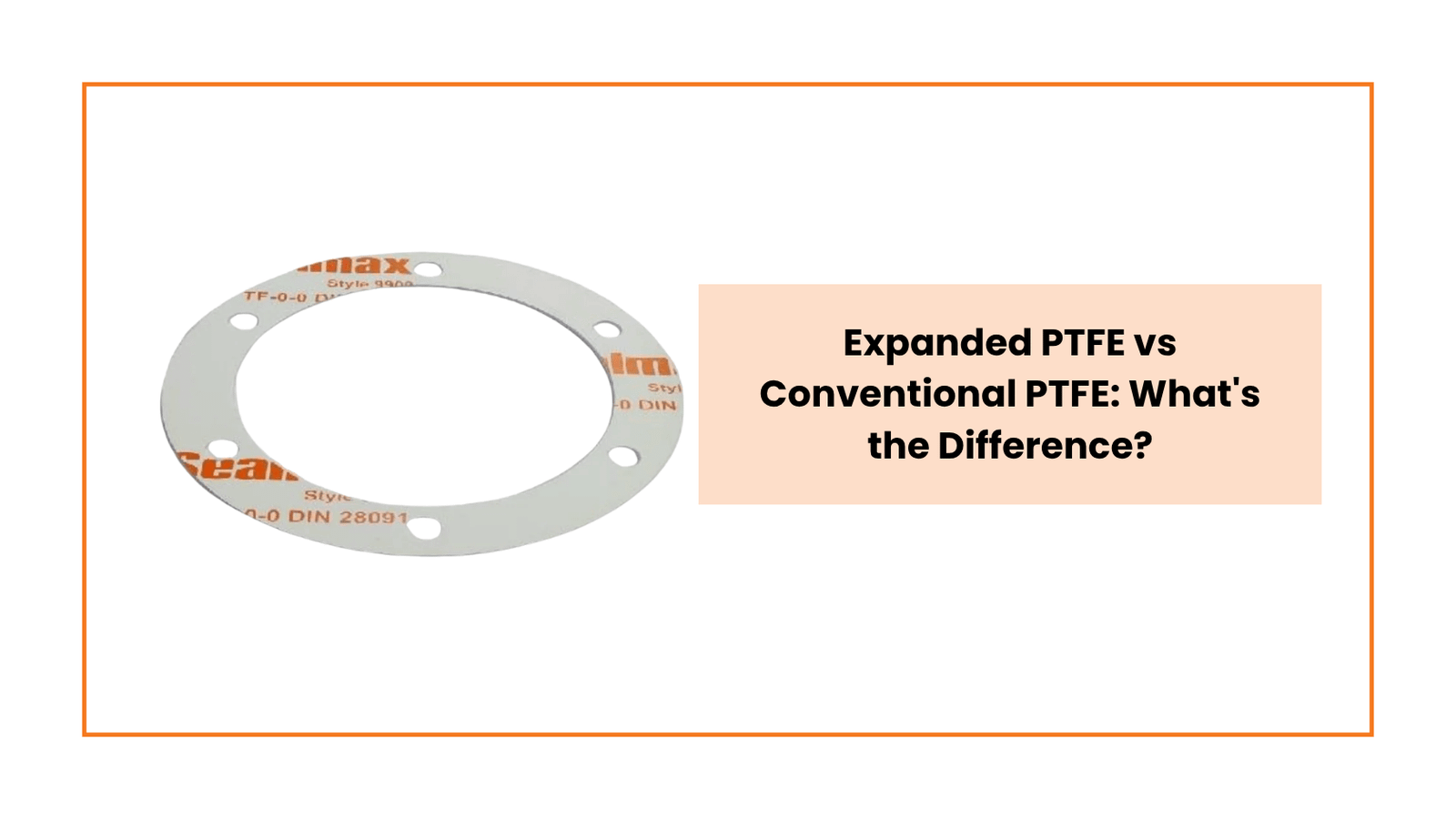
Sealmax Style 9909: Advanced Expanded PTFE Gasket Material
At Sealmax, we offer Style 9909 – Expanded PTFE Gasket Material, designed for demanding industrial sealing applications where reliability and chemical resistance are critical.
Manufactured from pure expanded PTFE, Style 9909 features a multi-directional fibrillated structure that provides excellent conformability, dimensional stability, and resistance to creep. These characteristics help maintain sealing integrity even on irregular or sensitive flange surfaces.
Sealmax Style 9909 is particularly suitable for:
- Chemical processing applications
- Pharmaceutical manufacturing
- Glass-lined equipment
- Food and beverage processing
- Corrosive media handling
- High-purity process systems
By combining outstanding chemical resistance with reliable long-term sealing performance, Style 9909 helps reduce leakage, minimize maintenance requirements, and improve overall plant reliability.
Conclusion
While conventional PTFE remains an excellent engineering material, expanded PTFE offers significant advantages where sealing performance is critical.
By combining PTFE’s renowned chemical resistance with enhanced flexibility, compressibility, dimensional stability, and long-term sealing reliability, expanded PTFE has become one of the most versatile gasket materials available today.
Modern materials such as Sealmax Style 9909 further enhance these benefits, providing industries with a dependable sealing solution capable of meeting the demanding requirements of today’s process environments.
Whether used in chemical processing, pharmaceuticals, food production, or high-purity applications, expanded PTFE continues to set the benchmark for reliable and effective industrial sealing.