Oxygen service applications demand an exceptional level of safety, reliability, and cleanliness. Components operating in oxygen-rich environments must not only withstand process conditions but also minimize the risk of ignition and contamination.
Selecting the right sealing material is therefore a critical part of oxygen system design.
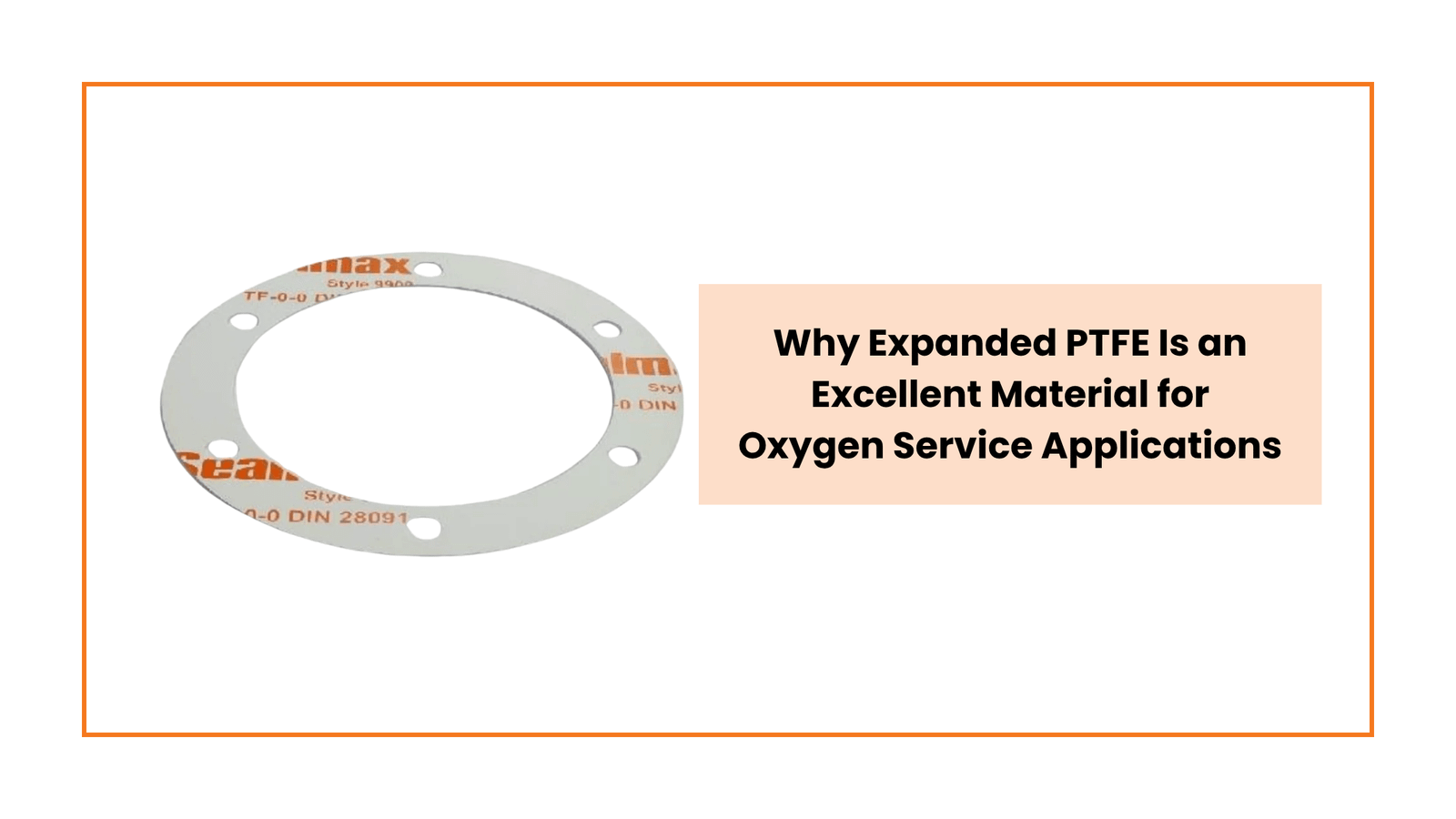
Among the various gasket materials available today, Expanded PTFE (ePTFE) has emerged as a preferred solution for many oxygen service applications due to its chemical inertness, purity, sealing performance, and broad operating range.
Understanding the Challenges of Oxygen Service
Although oxygen itself is not flammable, it significantly accelerates combustion.
In oxygen-enriched environments, materials can ignite more easily and burn more intensely than they would under normal atmospheric conditions. As a result, every component within an oxygen system must be carefully selected to reduce potential ignition risks and maintain system integrity.
Sealing materials used in oxygen service must satisfy several important requirements:
- High chemical purity
- Resistance to contamination
- Reliable sealing performance
- Wide temperature capability
- Long-term stability
- Compatibility with oxygen environments
This is where Expanded PTFE offers significant advantages.
What Makes Expanded PTFE Suitable for Oxygen Applications?
Expanded PTFE is manufactured from pure polytetrafluoroethylene (PTFE) through a controlled expansion process that creates a highly fibrillated microstructure.
The resulting material combines the well-known chemical resistance of PTFE with enhanced flexibility, compressibility, and sealing performance.
Several characteristics make Expanded PTFE particularly suitable for oxygen service.
Exceptional Chemical Inertness
PTFE is widely recognized as one of the most chemically resistant materials available.
It remains inert when exposed to most chemicals and process media, helping prevent material degradation and contamination over time. This chemical stability is one of the reasons PTFE-based materials are frequently selected for demanding industrial and high-purity applications.
High Material Purity
For oxygen systems, cleanliness and purity are critical.
Expanded PTFE manufactured from pure PTFE contains no added lubricants and can be supplied without fillers or pigments. This helps minimize potential contamination risks and supports applications where product purity is essential.
Excellent Sealing Performance
A sealing material must do more than simply withstand the process environment. It must also prevent leakage.
Expanded PTFE’s flexible and compressible structure allows it to conform to flange surface irregularities and maintain an effective seal even on challenging flange faces.
This helps reduce leakage risks and contributes to safer system operation.
Resistance to Aging and Environmental Exposure
Unlike many elastomeric materials, PTFE is highly resistant to weathering, moisture, and environmental degradation.
This contributes to long service life and reliable performance in a wide range of operating conditions.
Advantages of Expanded PTFE in Oxygen Systems
Reduced Risk of Leakage
Leakage in oxygen systems can create both operational and safety concerns.
Expanded PTFE’s excellent conformability enables reliable sealing performance, helping minimize leakage pathways and maintain system integrity.
Broad Temperature Capability
Expanded PTFE gasket materials can typically operate across a wide temperature range, making them suitable for various oxygen-related processes and industrial applications.
Suitable for Sensitive Equipment
Because of its soft and conformable nature, Expanded PTFE is often selected for applications involving:
- Glass-lined equipment
- Fragile flanges
- Corrosion-damaged flange surfaces
- Low bolt-load applications
Its ability to seal effectively without excessive flange stress can be particularly valuable in these situations.
Reduced Inventory Complexity
Expanded PTFE’s broad chemical compatibility and versatility allow many facilities to standardize on a single gasket material across multiple services, simplifying inventory management and procurement.
The Importance of Oxygen Cleaning
Even the best gasket material can become a safety risk if contamination is present.
For this reason, oxygen-service components often undergo specialized oxygen-cleaning procedures designed to remove oils, greases, hydrocarbons, dust, and other contaminants that could act as fuel sources in oxygen-rich environments.
Cleaning, inspection, packaging, and traceability are all essential steps in preparing components for oxygen service.
IDT’s Expertise in Oxygen Service Applications
For oxygen service applications, selecting the right gasket material is only one part of the equation. Equally important is ensuring that components are free from contaminants that could create ignition risks in oxygen-rich environments.
Through its partnership with IDT Industrie- und Dichtungstechnik GmbH, Germany, Sealmax is able to offer access to specialized oxygen-cleaning services for sealing products intended for oxygen service.
IDT has developed extensive expertise in oxygen applications, focusing on three key aspects of oxygen safety:
- Selection of suitable materials for oxygen service
- Adhesive-free sealing technologies that eliminate potential ignition sources
- Controlled oxygen-cleaning processes that minimize contamination risks
In IDT’s clean-room facility, contamination is monitored under strictly controlled environmental conditions. Products undergo cleaning, final inspection, and dedicated packaging specifically for oxygen applications. Each package is clearly marked for oxygen service, ensuring complete traceability throughout the supply chain.
This process helps eliminate contaminants, significantly reduce fire and explosion risks, and provide customers with products that are ready for oxygen service.
IDT’s in-house clean-room facility has been designed in accordance with DIN EN ISO 14644, Purity Class 7. The facility includes dedicated personnel and product airlocks, testing areas, and separate packaging zones to ensure the highest standards of cleanliness and quality assurance.
By combining suitable materials with professional oxygen-cleaning processes, users can further enhance the safety and reliability of oxygen systems.
Typical Applications
Expanded PTFE gaskets are commonly used in oxygen-related applications across:
- Industrial gas production and distribution
- Medical oxygen systems
- Chemical processing plants
- Pharmaceutical manufacturing
- Energy and power generation
- Semiconductor and high-purity process industries
Conclusion
Oxygen service applications require more than just a high-performance gasket. They demand materials that combine purity, chemical resistance, sealing reliability, and long-term stability.
Expanded PTFE meets these requirements exceptionally well. Its chemical inertness, excellent sealing characteristics, and adaptability to challenging flange conditions make it a trusted choice for many oxygen service applications.
However, material selection alone is not enough. Proper oxygen cleaning, inspection, handling, and packaging play a critical role in ensuring system safety. When combined with professional oxygen-cleaning procedures such as those offered by IDT, Expanded PTFE sealing solutions can help support safer, cleaner, and more reliable oxygen systems across a wide range of industries.